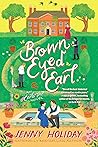
 Brown-Eyed Earl by Jenny Holiday
Tracy’s Rating: 3.5 of 5 stars
Series: Earls Trip #3
Release Date: October 27, 2026
Simon Courteney, the Earl of Marsden is quiet, thoughtful, and scholarly, with a tendency to put others’ needs before his own. After losing his older brothers and unexpectedly inheriting an earldom, he builds his life around responsibility, parliamentary work, and loyalty to his friends, Archie and Effie. He expresses his kindness through small, consistent gestures rather than grand declarations. His difficult relationship with his mother contributes to his reluctance to marry, while his friendship with Diantha prompts him to reconsider his future. His choices are shaped by a sense of duty and concern for others, and his story follows his efforts to balance those responsibilities with his own happiness.
Diantha Brown is intelligent, determined, and protective of her independence. After her family loses its financial security, her position as a companion provides stability and allows her to care for someone else. But when her former brother-in-law threatens to blackmail her unless she agrees to marry him, she acts to protect both herself and the woman in her care. Deciding the only way to save herself and her charge is to make herself an undesirable bride, and for that she will need a man to ruin her, and she believes Simon is the perfect man for the job.
This was a warm, humorous story with wonderful characters and lots of supportive friends. The book touches on some serious issues, like grief, blackmail, dementia and personal freedom, but is saved from being a dark and heavy read by its lighter moments. That said, I would have liked stronger tension around the blackmail and more satisfying, on-page resolutions to the conflicts. If you are looking for a book that is historically accurate, this book is not for you, this is more what I would call “a contemporary in period dress”, but it is still an enjoyable read. The book has found family, blackmail, good friends, one warm love scene, and a happy ending. Overall, this was a good read, and I felt the author handled the sensitive subjects with compassion and respect, so while I can’t say I loved it, I am glad I read it. This is the third (and final?) book in the series, and while it could be read as a standalone, I would recommend reading the books in order.
*I am voluntarily leaving a review for a DRC/ALC that I requested and was provided to me by the publisher/author. All opinions in this review are my own. *